At a glance:
- Match pallets to load type (static, dynamic, racking) and ensure they suit handling, storage, and transport conditions.
- Choose material by use case: timber for cost and repairability, plastic for hygiene/export, metal for specialised heavy-duty closed-loop systems.
- Confirm pallet size and compliance (ISPM 15, EURO standards) align with racking, handling equipment, and export rules.
- Factor in lifecycle cost and sustainability: timber supports repair, reuse, and recycling, reducing both expense and environmental impact.
A damaged pallet in transit or an export load rejected at the customs port can disrupt schedules, inflate costs, and strain client relationships.
Selecting the right pallet is therefore not just a purchasing decision. It’s a safeguard for efficiency, safety, and compliance. Material type, load capacity, environmental conditions, and regulatory requirements all determine how well a pallet performs from warehouse to final destination.
This guide outlines the key factors procurement teams, warehouse managers, and supply chain professionals should consider when making that choice.
Load Weight and Structural Strength
The weight a pallet can safely carry is a major factor in both efficiency and safety. If a pallet collapses, it can damage goods, interrupt schedules, and put people at risk, including warehouse staff and forklift drivers working nearby.
When evaluating load capacity, it’s important to distinguish between different types of loads:
- Static load: The weight a pallet can support while stationary, such as in a warehouse storage area
- Dynamic load: The weight it can carry while being moved, either by forklift or conveyor
- Racking load: The weight a pallet can bear when supported across beams in a racking system
Understanding these distinctions ensures pallets are used safely and appropriately across your supply chain.
Read More: How to Choose the Right Pallets for Your Needs
Material Type: Timber, Plastic, or Metal?
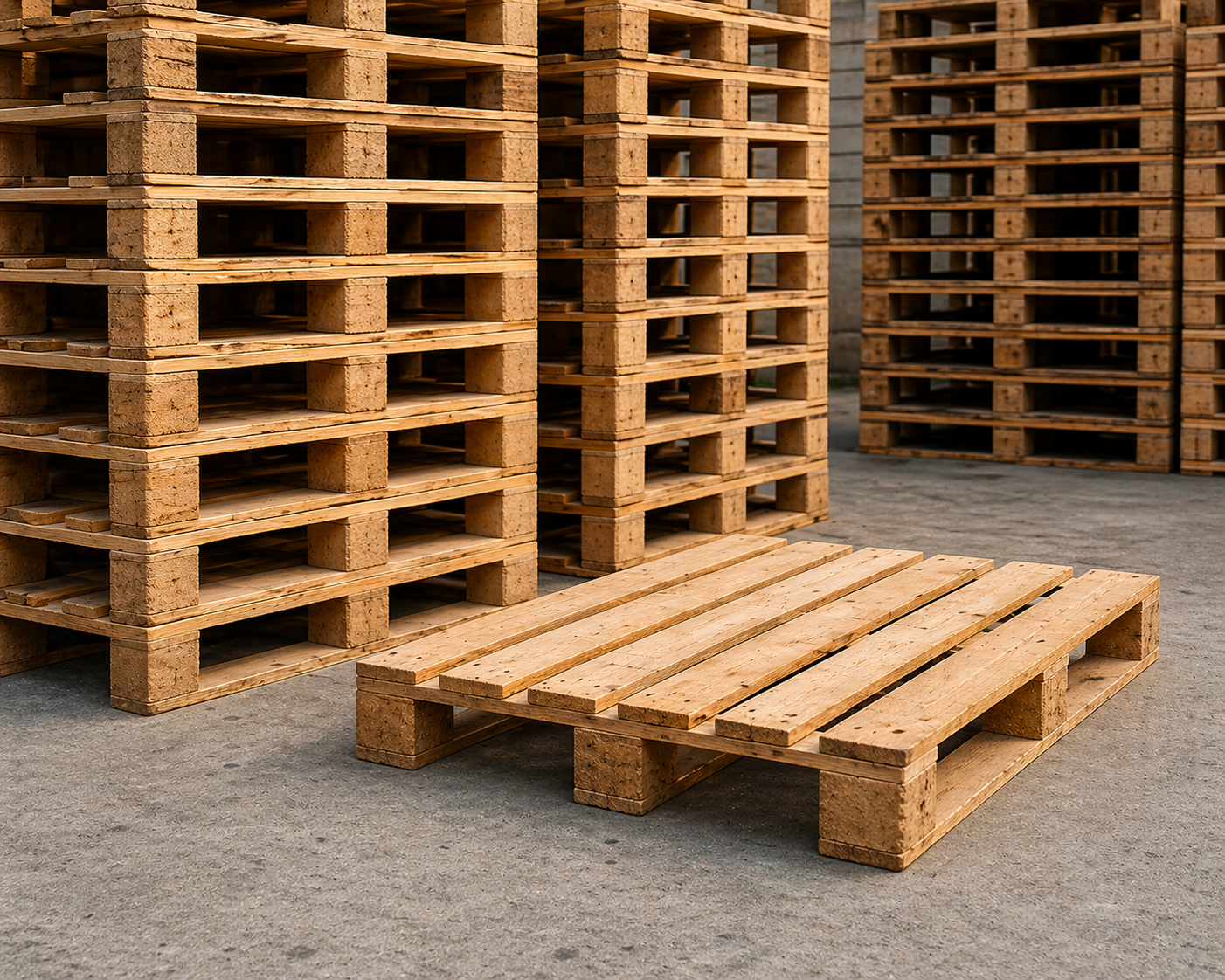
Material choice depends on lifecycle expectations and operational requirements. Wooden pallets remain the most common option due to their strength, affordability, and repairability. However, plastic and metal pallets are increasingly used in regulated or hygiene-critical industries.
Here is a comparison table of the three main material types used in the pallets.
| Basis of Difference | Wooden Pallets | Plastic Pallets | Metal Pallets |
|---|---|---|---|
| Cost-efficiency | Most affordable | Higher upfront cost | Most expensive |
| Load Capacity | Strong for most applications | Limited in heavy industrial loads | Exceptional strength for heavy loads |
| Repairability | Easy to repair | Often non-repairable | Requires special tools for repairs |
| Recyclability | Easy to recycle | Recyclable with proper facilities | Limited recyclability |
| Moisture/Hygiene Resistance | Absorbs moisture; not ideal for strict hygiene requirements | Washable and non-absorbent | Non-absorbent and washable |
| Ideal Use Case | General logistics and storage | Food, pharma, or export applications | Heavy industrial or closed-loop |
To learn more about the types of pallet materials for your use, check out our blog: A Comparison of Different Pallet Types – Metal vs. Plastic vs. Wooden Pallets
Usage Environment
The operating environment has a direct impact on pallet performance and lifespan. In cold storage or damp conditions, untreated timber can absorb moisture, leading to mould, warping, and eventual structural failure. In these cases, plastic and metal pallets offer greater resistance to humidity, while heat-treated pallets provide a more economical alternative for moisture-prone operations.
In sterile settings such as pharmaceutical plants or clean food production facilities, wood is often excluded entirely in favour of non-porous, washable materials like plastic. Outdoor storage brings its challenges, as prolonged UV exposure can degrade plastic unless it is made with UV-stabilised compounds.
Assessing storage conditions, handling practices, and sanitation needs ensures that pallet materials maintain both durability and load integrity under real-world operating pressures.
Destination and Compliance Requirements
In Australia, most domestic freight uses standard 1165mm x 1165mm pallets that work seamlessly with common handling equipment. Export shipments, however, demand strict alignment between pallet type and compliance standards. For instance, European shipments often require EURO pallets, while many other destinations mandate ISPM 15–compliant wooden pallets.
Failure to meet these standards can lead to delays, fines, or outright rejection of goods at customs. Some exporters may choose plastic or metal pallets to bypass compliance requirements, but for one-way international shipments, their higher cost makes them impractical unless used in a returnable closed-loop system.
Lifecycle Value and Total Cost
Timber pallets remain the most cost-effective choice for many Australian businesses. They have a low upfront cost and deliver strong lifecycle value when maintained properly. Unlike plastic or metal pallets, timber pallets are repairable, extending service life at minimal expense.
Well-maintained wooden pallets withstand operational wear and can be repaired rather than replaced, further reducing costs. They are also recyclable and widely available locally, lowering both procurement and disposal expenses. In contrast, while plastic and metal pallets may be more durable, repairing or recycling them is often complex, costly, and sometimes not feasible.
Plastic and metal may suit closed-loop systems or specific niche applications, but timber offers the best balance of strength, flexibility, and affordability for general logistics. Buyers who evaluate true cost per trip often find that timber comes out ahead when repairability and reuse are factored in.
Product Fit and Pallet Dimensions
Using the wrong pallet size can cause space inefficiencies and transport losses. Overhanging loads are more vulnerable to damage during handling or transit, while oversized pallets waste trailer and warehouse space. Matching pallet dimensions to your packaging type and operational needs is essential.
Consider how loads will be stacked, strapped, or stretch-wrapped, and how they’ll interface with racking or container dimensions. In some cases, custom-made pallets may reduce freight costs or improve stability, especially for irregular or fragile goods. Efficient sizing enhances safety, optimises space utilisation, and maximises transport ROI.
A well-specified pallet should also work seamlessly with your warehouse equipment. Mismatched pallets can increase handling time, damage inventory, and slow productivity. Ensure the pallet’s base design is compatible with forklifts, pallet jacks, conveyors, and racking systems in your facility.
Sustainability and Environmental Considerations
Sustainability is now a key factor in supply chain decision-making. Unlike many plastic or composite alternatives, timber is renewable, locally sourced, and supports circular economy practices through repair, reuse, and recycling, delivering both environmental and cost benefits.
Waterstone Pallets sources timber from responsibly managed forests, meeting strict environmental and ethical procurement standards. Through repair and reuse, we help clients extend pallet lifespan and minimise waste, avoiding the need for energy-intensive reprocessing methods.
Every operation handles pallets differently, from how goods are stacked and stored to loading frequency, transport routes, and regulatory requirements. A pallet that performs well in one environment may underperform in another.
Relying solely on generic specifications or standard advice risks mismatches, inefficiencies, and unnecessary costs.
Selecting the right pallet means understanding your entire operational context: what you’re moving, where it’s going, how it’s handled, and the risks involved. Pallet suppliers who take the time to engage with these details provide more than just pallets; they deliver lasting operational value.
Looking for expert guidance in selecting the right pallet? Contact Waterstone Pallets for tailored advice, custom solutions, and a reliable supply of quality timber pallets built for your operational needs.