At a glance
- Custom timber crates provide strong structural support and reliable protection for heavy, irregular or sensitive industrial goods.
- Standard boxes are suitable for lightweight, uniform items for low-risk transport.
- Timber crates perform better under demanding transport conditions, providing stronger durability and long-term value.
- Overall, custom timber crates remain the superior choice for most industrial shipping requirements.
Securely packaging irregular, heavy or oversized industrial equipment has always been a logistical challenge for industries. Unlike normal consumer goods that fit neatly into uniform cartons, industrial freight often does not fit into standard packaging dimensions. Trying to force a heavy, oddly shaped component into a generic box usually results in poor stability, excessive void fill and compromised protection.
Packaging plays a critical role in how well products endure real-world transport conditions. Industrial shipments are subject to heavy loads, continuous vibration, stacking pressure and frequent handling in warehouses and on trucks. If the packaging is not customised to accommodate the specific weight distribution of an irregular item, the risk of structural failure increases significantly.
This blog explores how custom timber crates and standard boxes perform in industrial environments. Understanding their structural differences, protective capabilities and ideal applications allows you to select packaging that better supports your operational needs.
Understanding Custom Timber Crates and Standard Boxes in Industrial Shipping
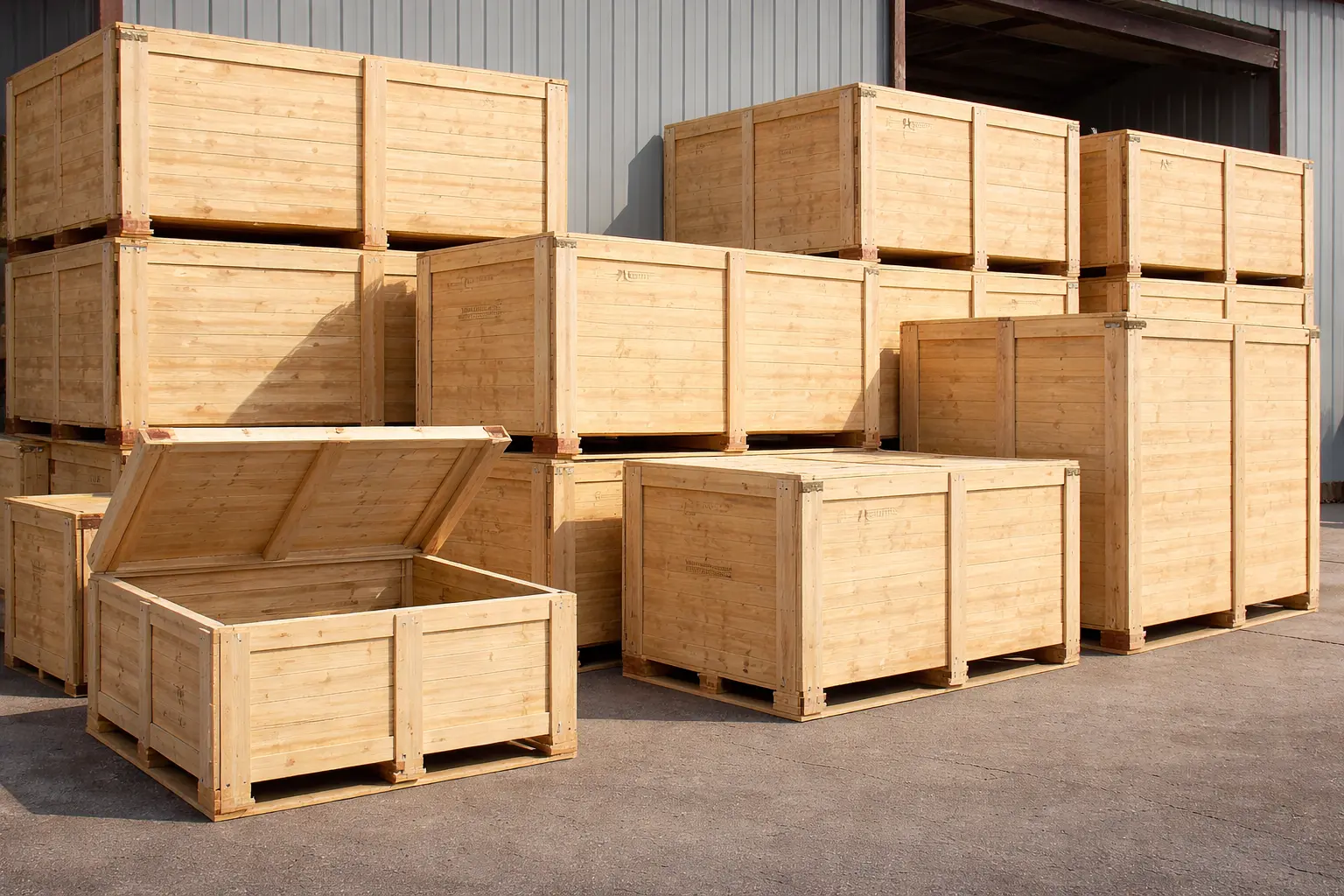
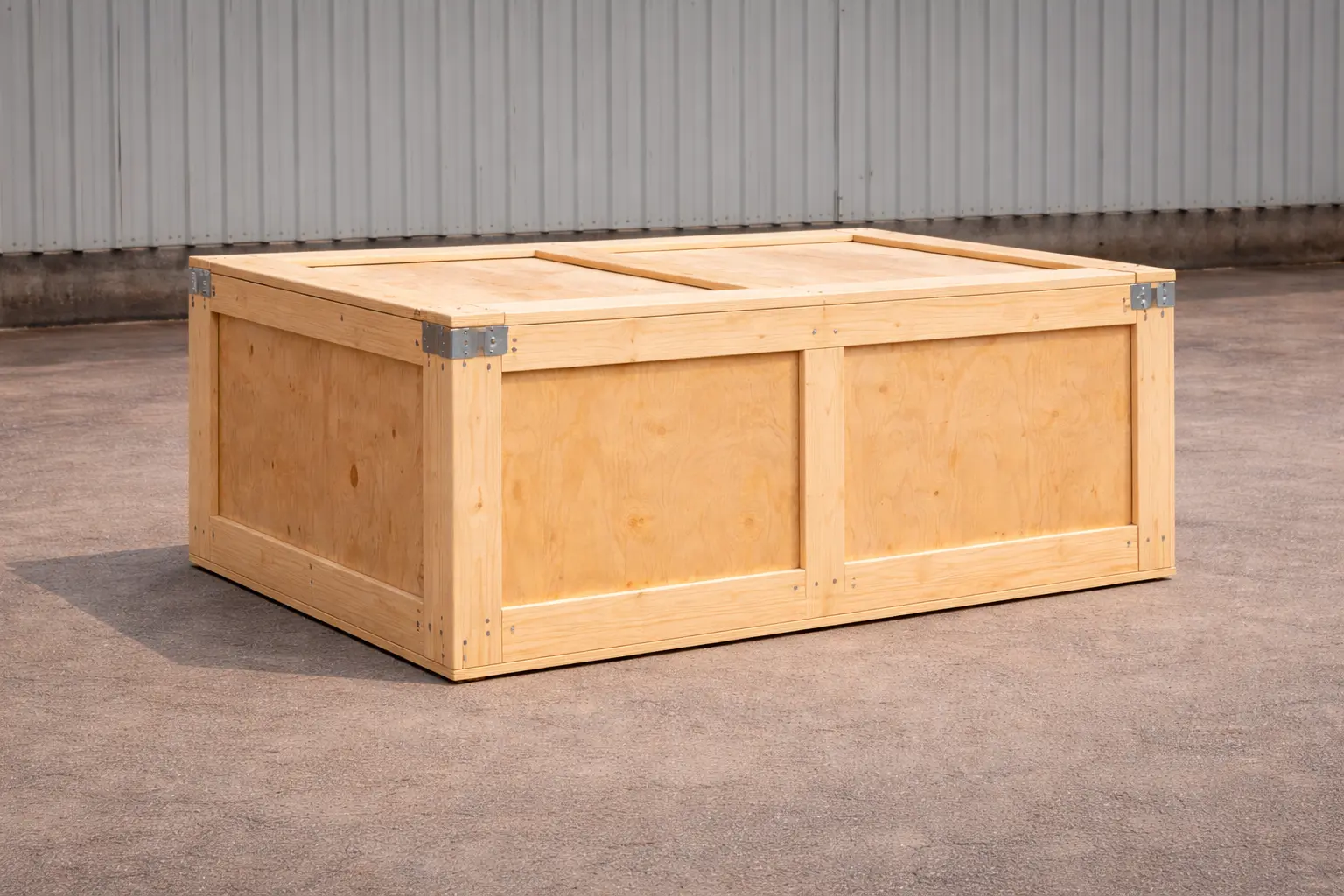
Custom timber crates are purpose-built packaging solutions designed to hold heavy, irregular or high-value industrial loads. Constructed from durable timber and tailored to an item’s exact dimensions, they provide strong structural support that withstands compression, impact and vibration. Their design can include reinforced bases, internal bracing, shock-absorbing parts and secure fastening systems.
Standard boxes are typically made of cardboard or similar lightweight materials and are commonly used for commercial goods and lighter industrial products. They perform well for uniform, low-risk items that travel short or controlled routes. However, their ability to withstand crushing, movement and varying handling conditions is limited.
Comparison Table: Custom Timber Crate vs Standard Boxes
To help you compare custom timber crates and standard boxes, the table below highlights their key differences across essential factors.
| Criteria | Custom Timber Crates | Standard Shipping Boxes |
| Load Capacity | Supports heavy, dense and irregular loads | Suited for light to moderate, uniform loads |
| Structural Strength | High rigidity and strong compression resistance | Limited strength; prone to deformation under weight |
| Protection Level | Superior impact and vibration resistance | Basic protection; higher risk of product damage |
| Customisation | Built to exact dimensions with internal bracing options | Standard sizes with minimal flexibility |
| Durability & Reusability | Long-lasting and ideal for repeat shipping cycles | Generally single or short-term use |
| Cost Considerations | Higher upfront investment, but greatly reduces risk of damage during transit. | Low upfront cost but higher risk of product transit damage. |
| Best Use Cases | Machinery, fragile items, oversized freight | Consumer goods, lightweight items, low-risk shipments |
How to Decide Between Custom Timber Crates and Standard Boxes
Selecting between custom timber crates and standard boxes depends on knowing the conditions your packaging needs to handle. The following factors help you decide which option is best for your shipping environment:
- Nature of Goods: Heavy, fragile, irregularly shaped or highly sensitive items benefit from the rigid structure and tailored protection of custom timber packaging crates. Standard boxes, on the other hand, work best for lightweight, uniform products that pose minimal risk during handling.
- Distance and Mode of Transport: Custom timber crates provide significantly more reliable protection for shipments travelling long distances via multimodal transport. For short, controlled routes with limited handling, standard boxes may still perform well.
- Budget Considerations: Standard boxes offer a lower upfront cost, making them suitable for low-value or low-risk items. However, when the cost of damage or replacements outweighs initial savings, custom timber crates provide greater long-term value.
- Frequency of Shipments and Reusability Requirements: How often goods move through the supply chain is important. Businesses with frequent shipments or repeat movements benefit from reusable, repairable timber crates that withstand multiple transport cycles. For occasional or single-use shipments, standard boxes may be more practical and cost-effective.
- Regulatory and Compliance Needs: Export markets often require ISPM 15-compliant timber and some cargo types require certified containment or quarantine-ready materials. In these cases, custom timber crates can be tailored to meet mandatory export standards that cardboard boxes cannot satisfy.
Read More: Understanding ISPM 15 Standards for Wooden Pallets
Which Solution Delivers Better Results in Industrial Shipping?
In challenging industrial shipping environments, the performance of custom timber crates and standard boxes varies significantly.
Performance in Heavy-Duty Industrial Transport
Custom Timber Crates: These crates provide reliable stability in heavy-duty shipping scenarios because they maintain structural integrity under dense loads, stacking pressure and long-distance transport conditions. Their rigid framework performs consistently through repeated handling by forklifts, cranes and multimodal freight systems.
Standard Boxes: Because these boxes have limited structural strength, they are suited only to light or uniform loads. During long-haul or high-pressure transport, they are more likely to deform or collapse, which reduces their suitability for industrial transport applications.
Protection Requirements for Sensitive Components
Custom Timber Crates: For fragile equipment or precision components, these crates provide superior protection. Their sturdy construction and optional internal bracing cushion sensitive machinery against vibration and impact. As a result, they are a reliable choice for machinery, electronics and high-value assets.
Standard Boxes: Standard boxes provide only basic shielding and generally cannot withstand the vibration, moisture or contact stress common in industrial shipping. To offer even minimal protection for sensitive items, they often require extensive secondary packaging, which increases labour and material use.
Handling Efficiency Across Warehousing and Loading Operations
Custom Timber Crates: Timber crates for industrial transport are engineered for predictable movement through warehouses. They allow secure forklift access, stable stacking and smooth transfer across loading zones. That way, this design supports faster handling and reduces unnecessary delays.
Standard Boxes: Although they may be easy to carry when lightweight, standard boxes become unstable or difficult to manoeuvre as the weight increases. Their need for careful handling and reinforcement can slow down warehouse operations and introduce inconsistency into loading processes.
Cost Efficiency Within Industrial Supply Chains
Custom Timber Crates: While the initial cost of heavy-duty shipping crates may be higher, they often deliver stronger lifecycle value. Their durability helps reduce product damage, lowering overall supply chain costs for frequent or high-risk shipments. If your industry moves high-value machinery or sensitive components, custom timber crates typically offer a better return on investment. Moreover, wooden pallets can be repaired to extend their service life, reducing replacement costs.
Standard Boxes: At first, these boxes may seem cost-effective, but they can lead to higher costs over time. This is due to their higher risk of product damage, shorter lifespan and limited reusability. If you’re handling low-value goods or don’t require high durability, these boxes can be a suitable choice.
In industrial shipping, the choice between custom timber crates and standard boxes becomes clear when you consider the specific needs of freight. Heavy, irregular or sensitive items, as well as any load that travels long distances, need the strength and stability that custom timber crates offer. Standard boxes are suitable only for light, uniform goods that experience minimal pressure or vibration.
Ultimately, the most effective packaging prevents damage, supports efficient handling and remains reliable from dispatch to delivery. For many industrial operations, custom timber crates consistently provide that assurance, making them a smarter long-term solution.
If you are looking for a reliable custom timber crate supplier for industrial shipping, consider Waterstone Pallets. Our team designs and manufactures crates that withstand harsh freight conditions, customised to your freight weight, dimensions and required protection. Speak with our team to discuss a solution tailored to your operational needs.
FAQs
How long does it typically take to manufacture custom timber crates for industrial shipments?
Most custom timber crates are manufactured within 2 to 7 business days, depending on the design requirements, order volume and the supplier’s current workload.
What maintenance or inspection steps should companies follow if they plan to reuse timber crates?
Before reuse, inspect crates for cracks, loose fasteners, rot, stains or signs of pests, then clean them thoroughly and ensure they are completely dry. Any structural issues, such as damaged slats or weakened joints, should be repaired or reinforced to maintain safe performance.
When should businesses choose custom timber crates instead of standard boxes for industrial shipping?
Businesses should choose custom timber crates for heavy, irregular, fragile or high-value items that need extra protection and stability. This is especially important for shipments travelling long distances or through demanding transport routes.