At a glance
- Plywood boxes offer strong, reliable protection for international export shipments.
- They are widely used across logistics, manufacturing, warehousing and electronics sectors.
- Their lightweight, compliant design helps reduce freight costs and transit risks.
- Custom-built plywood boxes support secure packaging for a wide range of export goods.
Exporting goods requires handling multiple logistical demands. Goods may have to travel long distances, pass through multiple handling points and cross regional boundaries and international borders before reaching their destination. Protecting goods and preventing costly damage in those conditions makes selecting the right export packaging material essential.
Export packaging must manage weight, strength, handling requirements and regulatory compliance while keeping freight costs under control. Plywood boxes are a reliable choice for exporters and manufacturers seeking durability, compliance and efficiency.
This blog explains what plywood boxes are, their role in export logistics, the industries that rely on them and why they’re ideal for international packaging. By the end, you will understand their value for secure, hassle-free international shipping.
What Are Plywood Boxes?
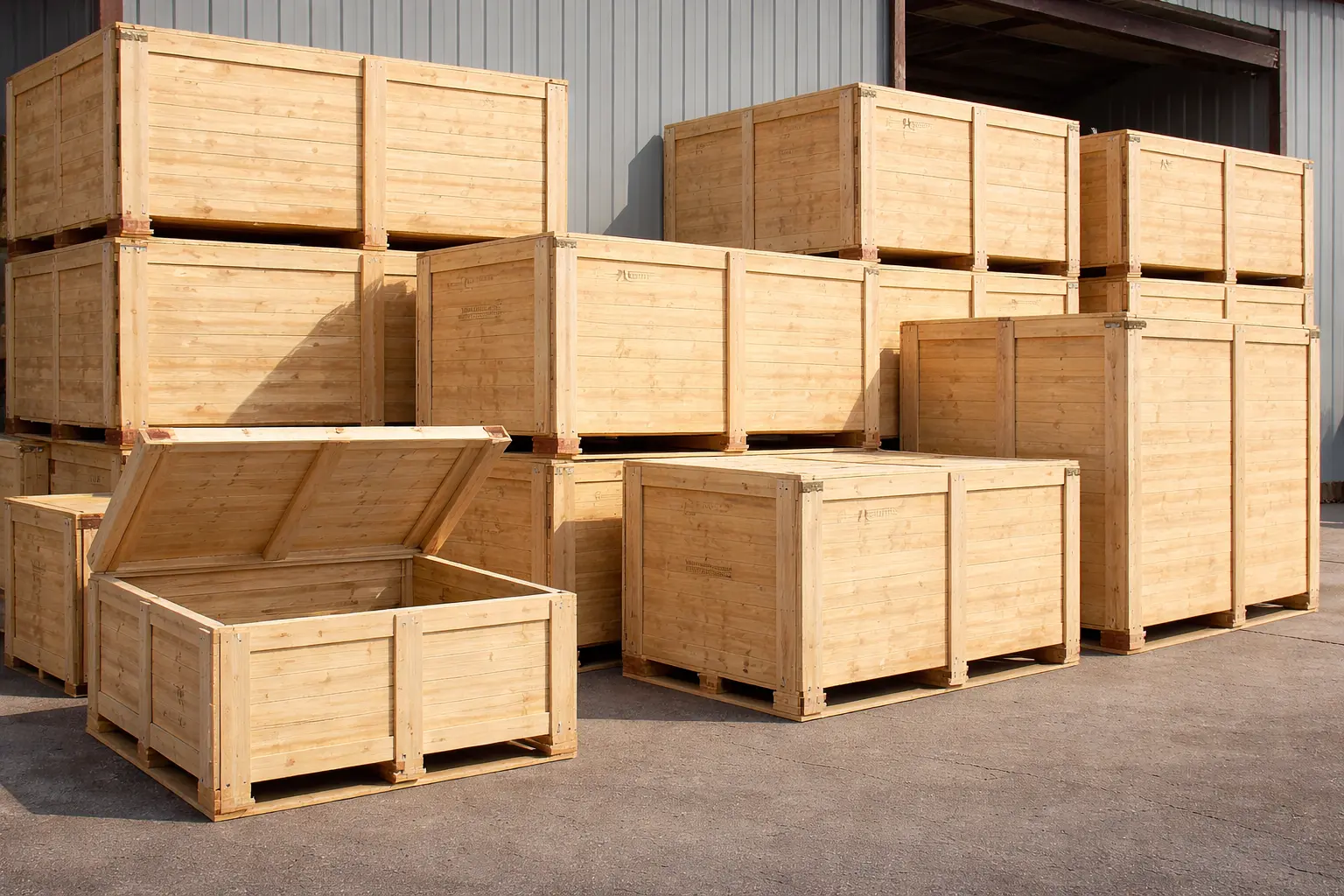
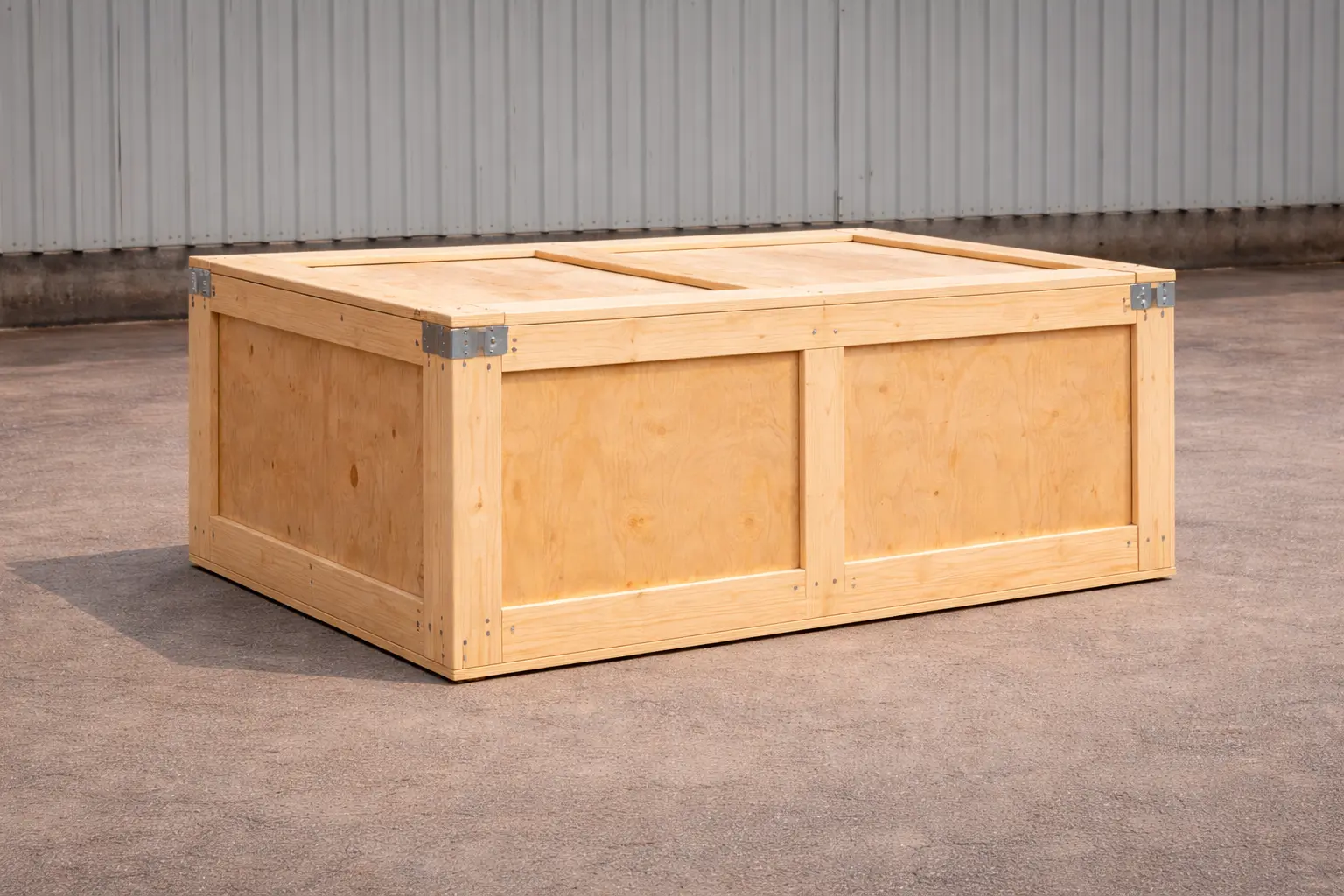
Plywood boxes are durable packaging solutions that are made from plywood panels to protect goods during storage and transport. Made from multiple thin layers of wood veneer, these panels are bonded with strong industrial adhesives. This layered construction produces a lightweight, stable material.
The boxes have timber framing for reinforcement and are secured with fixings like nails, screws or staples. This combination of engineered panels and solid framing offers strength, consistency and reliable load support. As a result, plywood boxes are ideal for handling heavy, delicate or irregularly shaped items.
Unlike solid timber crates, plywood boxes offer a greater strength-to-weight ratio and are less likely to split or warp. Plus, they can be manufactured with precision and customised to fit specific sizes. This makes them an ideal option for exporters who need reliable, compliant and efficient packaging solutions.
Common Uses of Plywood Boxes in Export Logistics
Plywood boxes are widely used in export logistics due to their strength, flexibility and protective performance. Here are some of the main uses of plywood boxes in export logistics:
- Retail Goods: Plywood boxes protect packaged retail products from crushing and deformation during stacking and container loading. They offer sturdy outer protection that minimises damage from handling, movement and pressure during long trips. This is particularly important for bulk retail exports, where consistency upon arrival is vital.
- Fast-Moving Consumer Goods (FMCG): For exporting fast-moving consumer goods (FMCG), plywood boxes are critical to ensuring stable bulk shipments. They maintain a consistent load structure, helping prevent shifting or collapse during transit. This not only minimises product loss but also reduces the chances of packaging failures.
- Fragile Items with Internal Padding: For fragile goods, external protection alone is not enough. Plywood boxes can be enhanced with internal bracing, foam or cushioning to minimise vibration and absorb impact. This additional internal support is crucial for protecting delicate items from damage during handling and transport.
- Machinery and Tools: Due to their strength and stability, plywood boxes are commonly used to export machinery and tools. They hold heavy or precision equipment securely in place. This reduces movement that could affect alignment or performance.
- Oversized or Awkward Loads: Custom-made plywood boxes are ideal for oversized or awkward loads that do not fit in standard packaging. They can be tailored to meet specific dimensions while remaining compatible with forklifts and shipping containers. This means exporters can transport complex loads safely and efficiently.
Which Industries Commonly Use Plywood Boxes for Packaging?
Plywood boxes are adaptable to different cargo types, transport methods and handling environments. The following industries commonly use plywood boxes for packaging:
Shipping and Logistics
In shipping and logistics, plywood boxes protect goods moving through long distances and multimodal transport chains. Export plywood boxes withstand repeated handling, transfers between vehicles and extended transit without compromising load integrity.
Uniform sizing and consistent construction of plywood boxes improve loading and handling efficiency. They also help logistics providers use space effectively, reduce shifting during transport and lower the risk of damage or non-compliance during international freight movements.
Manufacturing
Manufacturers use plywood packaging for export shipments of machinery, components and finished products. These boxes offer stable external protection and include internal supports that secure delicate items during transit.
Custom-built plywood export boxes often align with production volumes and export schedules. This ensures the packaging supports efficient dispatch, protects product quality and fits well into outbound logistics operations.
Warehousing and Storage
In warehousing and storage environments, plywood boxes help with safe stacking and organised handling of export-ready goods. Their sturdy design keeps goods stable during storage before shipping, reducing the risk of collapse or damage during handling.
Plywood packaging for export also protects goods against dust, moisture and accidental impact during storage. This makes plywood boxes suitable for both short-term staging and longer holding periods before international shipment.
Read More: How to Store and Handle Pallets Safely in Your Warehouse
Electronics and Technology
The electronics and technology industry relies on plywood boxes to keep sensitive equipment safe during export. These boxes are designed to withstand vibrations and shocks during transport, providing the structural support needed to protect the contents.
To ensure high-value components are well-protected, internal cushioning and custom fittings are commonly incorporated. Plus, these secure plywood export boxes make customs inspections easier and help minimise the risk of damage during international shipping.
Why Are Plywood Boxes Ideal for Export Packaging?
Because plywood boxes offer a balanced combination of structural reliability, efficiency and adaptability, they are widely used in export logistics. Let’s explore the key features and benefits of plywood boxes that make them ideal for safe and efficient export transport:
Strength Without Excess Weight
Plywood is considerably lighter than solid timber, which makes it a practical choice for export packaging where weight control is important. Its engineered construction provides strong load-bearing capacity without the extra bulk typically associated with traditional timber crates.
This combination of strength and lighter weight allows plywood boxes to support heavy or dense items without raising the overall shipment weight.
For exporters, this means easier handling and better loading efficiency. It also allows for more effective management of freight limits while ensuring reliable protection for goods during transit.
ISPM 15 Compliance Advantages
Plywood panels are manufactured using heat and industrial adhesives, which often means they do not require the full ISPM 15 treatment process. This makes them easier to handle than solid timber packaging, which usually requires fumigation or heat treatment before export.
Such an exemption simplifies compliance and paperwork if you are operating in multiple international markets. This also helps minimise the chances of delays, inspections or rejections at customs. As a result, it allows shipments to pass through border controls more smoothly.
Read More: Comparing Heat-Treated vs. Fumigated Wooden Pallets
Improved Protection in Transit
Plywood boxes are a reliable choice for protecting your goods from impact and vibration during long-distance shipping. Thanks to their layered construction, they effectively absorb movement and minimise stress on items throughout various handling stages and transport methods.
Plywood boxes also perform well in export environments by withstanding humidity, salt air and fluctuating storage conditions commonly encountered during international transport. This durability safeguards your products against humidity, salt air and fluctuating storage conditions.
Cost Efficiency for International Freight
By combining reduced packaging weight with durable construction, plywood offers a cost-efficient option for international freight. The lighter design of plywood boxes can significantly reduce air and sea freight costs, while still providing the strength needed to protect goods during export journeys.
Beyond freight savings, plywood boxes are a cost-effective packaging option for businesses of any size.
Their durability reduces damage-related losses and lowers re-shipping costs. Additionally, the ability to be reused across multiple shipments helps exporters improve long-term cost control.
Read More: Hidden Fees in Pallet Hire: What Your Business Might Be Overpaying
Design Flexibility for Export-Specific Requirements
Plywood boxes can be tailored to meet the specific dimensions, weight and handling requirements of export cargo. This customisation ensures that goods are well-supported and minimises any unnecessary movement during transit.
You can also add design features like internal bracing, access panels, and lift points to accommodate various transport methods and destination needs. This level of flexibility enables exporters to closely align their packaging design with logistics planning, handling equipment and regulatory requirements.
Plywood boxes have become a go-to choice for export packaging due to their practicality and reliability across various industries. Due to the manufacturing process of plywood, the material is exempt from ISPM15 and doesn’t require heat or fumigation treatment to be suitable for export. Boxes made from plywood provide the strength and protection required for international shipping for retail products, fast-moving consumer goods, machinery, electronics or oversized goods. Their versatility makes them ideal for shipping, manufacturing, warehousing and tech-driven sectors.
Professionally manufactured plywood boxes reduce risk, simplify logistics and help support smoother global supply chains. For exporters and manufacturers, selecting plywood boxes ensures products remain protected, compliant and ready to perform in demanding international markets.
Partner with Waterstone Pallets to design custom plywood boxes and export packaging built for strength, compliance and international transport. We are a trusted pallet manufacturer in Melbourne, specialising in custom plywood export boxes. Contact us today to discuss your plywood export packaging needs.
FAQs
When should exporters choose plywood boxes instead of cartons or other lightweight packaging?
Exporters should choose plywood boxes when cartons or other lightweight packaging are not strong enough to protect the goods. They are best used for heavy, fragile, high-value or irregular items, especially for long-distance international shipping.
Are plywood boxes suitable for repeated export shipments or single-use applications?
Plywood boxes can be used for both repeated export shipments and single-use applications. Their durable construction allows reuse multiple times, and their cost efficiency makes them practical for single-use exports where return logistics are not required.
What factors should exporters consider before ordering custom plywood boxes?
Before ordering custom plywood boxes, you should consider the size, weight and fragility of the goods, transport method and destination requirements.
How do plywood boxes compare to solid timber crates for international export?
Plywood boxes are generally lighter, more consistent in strength and easier to customise than solid timber crates. They are often simpler to manage for export compliance and can reduce freight costs.