At a glance
- Standard timber packaging is best suited to consistent, high-volume operations where speed and cost control are essential.
- Custom timber packaging is ideal for irregular, fragile or export-bound goods that require added protection and compliance.
- The right timber packaging choice impacts cost, efficiency, product protection and export compliance across your supply chain.
- Aligning your packaging with product requirements and logistics conditions leads to better freight efficiency and fewer operational risks.
In export and warehouse operations, timber packaging serves a purpose beyond just transportation. It influences efficiency, safety and compliance in your supply chain. The type of pallet or crate you choose directly affects handling, protection and regulatory outcomes.
Choosing between standard and fully custom timber packaging affects not only initial costs but also freight efficiency, load stability and the risk of damage. It also helps meet requirements such as ISPM 15, where the wrong choice can lead to delays or additional costs.
So, how do you decide what works best? This blog breaks down standard vs custom timber packaging to help you choose the right option based on your products, logistics and needs.
Before we get into that, it’s important to understand what standard and custom timber packaging actually are.
What Is Standard Timber Packaging?
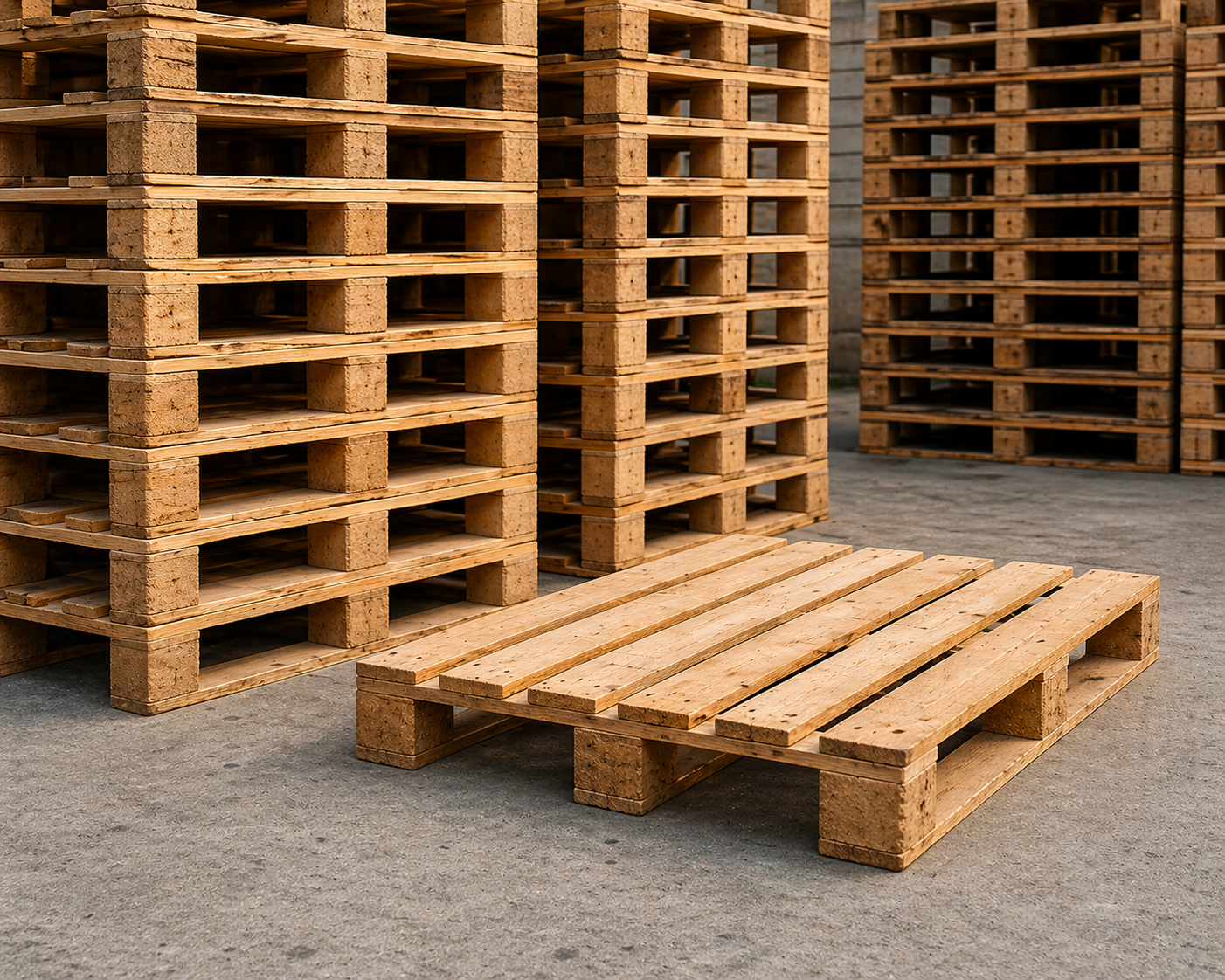
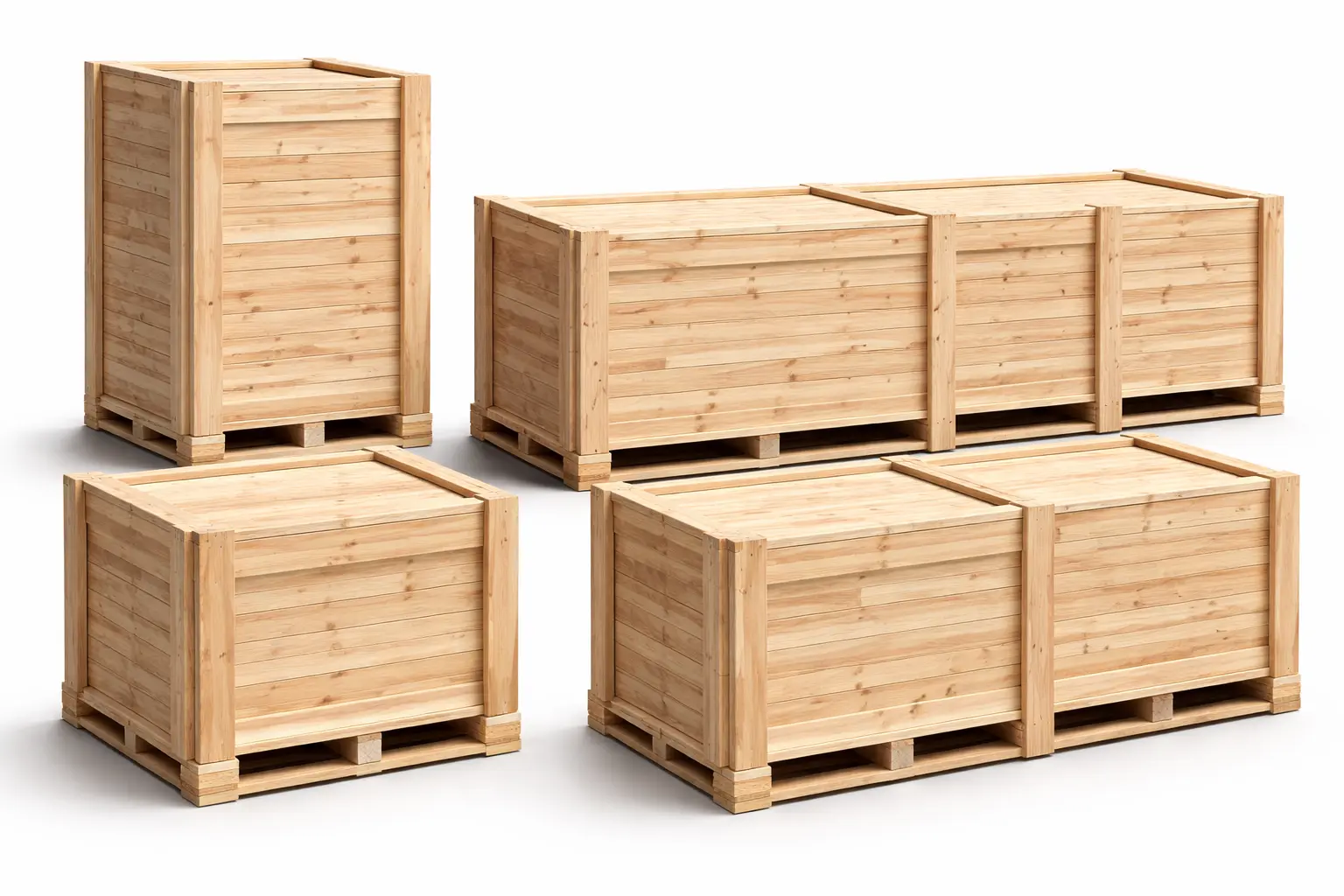
Standard timber packaging refers to pre-sized and ready-made solutions specifically designed for the general handling and transportation of goods. This usually includes timber pallets (1165mm x 1165mm), along with timber cases and crates built to consistent dimensions. These standard sizes are compatible with forklifts, pallet jacks and typical warehouse systems.
They are designed to handle consistent loads and perform reliably across repeated handling cycles. For businesses that move regular volumes of goods, this level of consistency offers a reliable and cost-effective packaging option.
One key benefit of standard timber packaging is operational efficiency. Uniform sizes allow for quicker loading and unloading, easier storage and simpler inventory management. It is ideal for high-volume shipments, steady product lines and warehouses where speed, reliability and cost management matter.
What Is Fully Custom Timber Packaging?
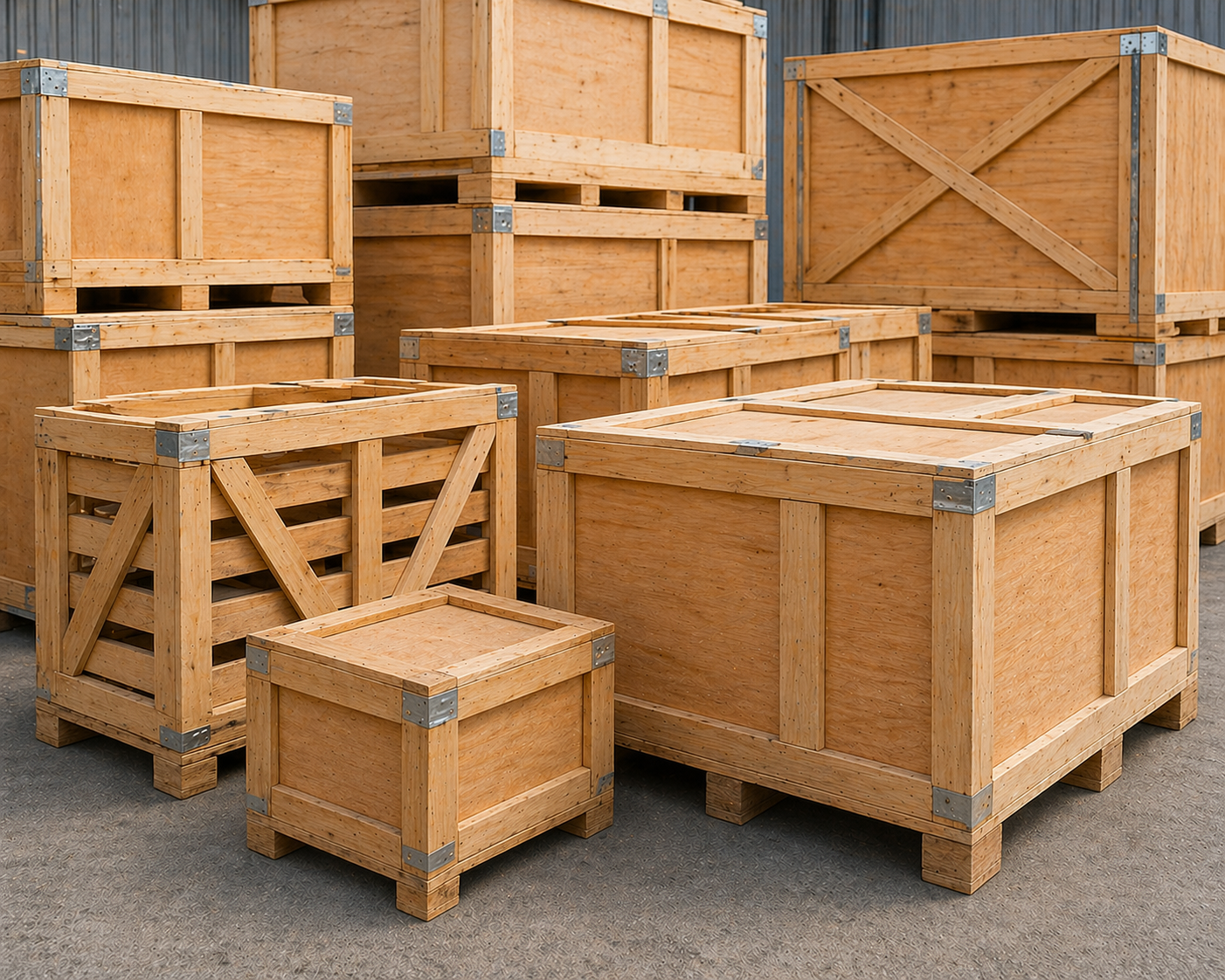
Custom timber packaging is specifically designed to fit your product, rather than relying on standard sizes that may not suit it. Each pallet, crate or case is built to match specific dimensions, weights and handling requirements. That way, you get a better fit for items that fall outside standard shapes or sizes.
What makes it valuable is its flexibility. Whether light, medium or heavy duty, custom timber packaging can be designed for different load capacities. It can also include reinforcements, bracing or specialised supports for fragile or complex items.
Custom solutions can be developed to meet ISPM 15 requirements and comply with international shipping standards. That is why they are often used for oversized machinery, high-value equipment and items being shipped over long distances.
What Are the Key Differences Between Standard and Custom Timber Packaging?
Here’s a quick comparison of standard vs custom timber packaging to help you understand how they differ across the most important factors:
| Factor | Standard Timber Packaging | Custom Timber Packaging |
| Cost | Lower upfront cost | Higher initial investment due to custom design |
| Availability | Can be readily available off the shelf | Made-to-order with longer lead time |
| Flexibility | Fixed sizes and limited adaptability | Fully tailored to product dimensions and requirements |
| Protection | General-purpose protection for standard goods | Designed for load-specific stability and higher protection |
| Suitability | Best for uniform, non-fragile goods | Ideal for irregular, oversized, fragile or high-value goods |
| Compliance (ISPM 15) | Can be compliant if properly heat-treated and stamped | Can also be compliant when manufactured and treated to export standards |
When Standard Timber Packaging Is the Better Choice
In warehouse and distribution environments, maintaining predictable and cost-efficient operations is crucial. Standard formats provide the consistency needed for reliable timber packaging while minimising complexity.
High-Volume, Consistent Operations
When products are uniform and move in large quantities, standard pallets create a stable and repeatable process. Their fixed dimensions allow them to fit neatly into existing warehouse pallet solutions. This supports efficient stacking, storage and retrieval without the need for constant adjustments.
They are particularly effective in industries such as retail, food distribution and manufacturing, where identical products are handled daily.
Because everything follows a consistent format, operations can move faster with fewer disruptions. There is less need to rethink layouts or handling methods, which enhances precision and reduces the time spent on manual corrections. Over time, this consistency becomes a major factor in operational efficiency.
Cost-Controlled Logistics
For businesses looking to manage costs, standard pallets offer a smart, straightforward solution. They are readily available and don’t require any extra design or production time. This makes them easy to incorporate into everyday logistics and packaging without a high additional cost.
It’s not only about saving money in the short term; standardisation also makes operations easier. Handling processes remain simple, training requirements are minimal and planning becomes more predictable. This also makes standard pallets a smart first choice for new businesses, helping control costs while still ensuring reliable packaging solutions.
Domestic Freight and Short-Term Use
Standard timber packaging provides an easy and practical solution for domestic transport across Australia. Compatible with most transport systems and requiring no special adjustments, it facilitates quick and straightforward loading and unloading.
In situations where goods are moved quickly or stored briefly, this simplicity becomes even more valuable. Standard formats allow for fast turnaround without overcomplicating the packaging. They are well-suited for industrial timber packaging needs that prioritise speed and practicality over customisation.
Fast Turnaround and Automation
When speed is critical in operations, standard pallets are essential for maintaining momentum. Easy availability means businesses can skip production wait times and start packing and shipping goods right away. This is particularly beneficial in situations where timing is critical.
Similarly, their consistent sizing is ideal for automated systems, such as conveyor belts and racking setups. This compatibility minimises friction in the workflow and helps ensure a smooth operation. It’s one of the key advantages of standard pallets in high-volume environments where even small delays can add up quickly.
When Custom Timber Packaging Is the Better Choice
As products become more complex and logistics demands rise, packaging must do more than just support movement. Custom timber packaging solutions help businesses match packaging to the specific needs of their goods.
Here are the most common situations where custom options can make a difference:
Irregular or Oversized Loads
Not all products come in standard sizes or dimensions. Large machinery and uniquely shaped items often require packaging designed to fit the product, rather than being forced into a fixed size. Custom timber packaging allows for accurate sizing, ensuring balanced weight and stable loads during handling.
A precise fit is important for both safety and efficiency. By designing packaging around the product, you can prevent issues such as imbalance or awkward handling. As a result, industrial timber packaging becomes more effective for complex or oversized loads.
Read more: How to Specify the Right Dimensions for Custom Pallets
Fragile or High-Value Goods
Fragile or high-value goods demand a much smaller margin for error during transport. Custom timber packaging allows for reinforcements, bracing and cushioning to be integrated into the design. This design approach helps absorb impact and minimises movement throughout transit.
Adding layers of protection helps reduce the risk of damage and maintain product quality from start to finish. One of the key strengths of custom timber packaging lies in its ability to safeguard sensitive shipments. It is valuable for industries such as electronics, medical equipment and precision manufacturing. In these sectors, even minor damage can lead to significant losses.
Read more: The Role of Custom Timber Packaging in Protecting Delicate Items
Export Compliance and International Shipping
International shipping requires strict packaging and compliance standards before goods can cross borders. Custom-built timber packaging can be designed to comply with ISPM 15 standards and tailored to the unique size, weight and handling requirements.
Beyond compliance, well-designed export packaging is important for shipping performance. Well-designed solutions minimise customs delays, simplify clearance processes and improve the goods movement in logistics systems.
Consistent, export-ready packaging also helps maintain reliability across international supply chains, particularly for repeat shipments.
Long-Distance and Complex Logistics
As transport routes become longer and more complex, the demands on packaging increase. Multiple handling points and varying conditions can all increase the risk of load movement or damage.
Tailored timber packaging is designed to address these challenges, offering greater durability and load stability across multiple handling stages. For businesses focused on freight efficiency, this level of control helps minimise disruptions. It also ensures goods arrive in the same condition they were dispatched.
There is no one-size-fits-all approach when it comes to timber packaging. The best option depends on your product type, how it’s handled and the conditions it faces during transport. Cost, shipping efficiency, protection and regulatory compliance are all important factors, so it’s essential to consider the whole picture rather than focusing on just one element.
Generally, standard timber packaging is ideal for steady, high-volume operations where speed, ease and cost control are important. Custom timber packaging is best suited to irregular, fragile or export items needing a precise fit and compliance with international standards. Aligning your packaging with operational needs can improve handling efficiency and reduce risk.
Need packaging that improves efficiency and keeps costs under control? Whether you require standard pallets, custom solutions or a combination of both, Waterstone Pallets, an experienced pallet manufacturer, can support your next move. Request a quote today from our contact page and get an accurate cost estimate for your requirements.
FAQs
Is it possible to use both standard and custom timber packaging within the same operation?
Yes, it is possible and often beneficial to use both standard and custom timber packaging within the same operation. Standard pallets efficiently handle high-volume, consistent goods, while custom packaging is used for irregular or fragile items.
Can timber packaging be reused or repurposed across multiple shipments?
Yes, timber packaging such as pallets and crates is highly suitable for reuse across multiple shipments due to its durability, repairability and versatility. Reusing timber packaging helps reduce waste and can lower long-term operational costs, provided it is regularly inspected and remains fit for purpose.
What factors affect the lead time for custom timber packaging?
Lead time for custom timber packaging depends on several factors, including design complexity, size and specifications, material availability and production capacity. Additional requirements, such as heat treatment for export (ISPM 15) or large order volumes, can also extend timelines.
When should I consider investing in fully custom timber pallets for my business?
Invest in fully custom timber pallets when your goods are irregular, fragile, high-value or require specific handling or export compliance. Custom solutions offer a better fit and improved protection. Read our blog to understand more about Custom Pallets: Tailoring to Your Business Requirements.