At a glance
- Plywood boxes reduce packaging weight by using lighter panels instead of heavy solid-timber construction.
- Layered veneers provide a strong strength-to-weight ratio while keeping the enclosure rigid and protective.
- Targeted framing and reinforcement add support where the cargo places the greatest structural demand.
- Custom sizing helps avoid unnecessary material while keeping goods secure during handling and transport.
Every shipment carries more than the goods themselves. Packaging adds weight to every consignment, and that extra mass affects your freight costs, especially where transport charges are calculated by weight or space.
Reducing packaging weight can improve freight efficiency, but it must not reduce the level of protection a shipment needs. Goods still need enough structural support to withstand handling, stacking and transit conditions, so any lighter option must still perform reliably under load.
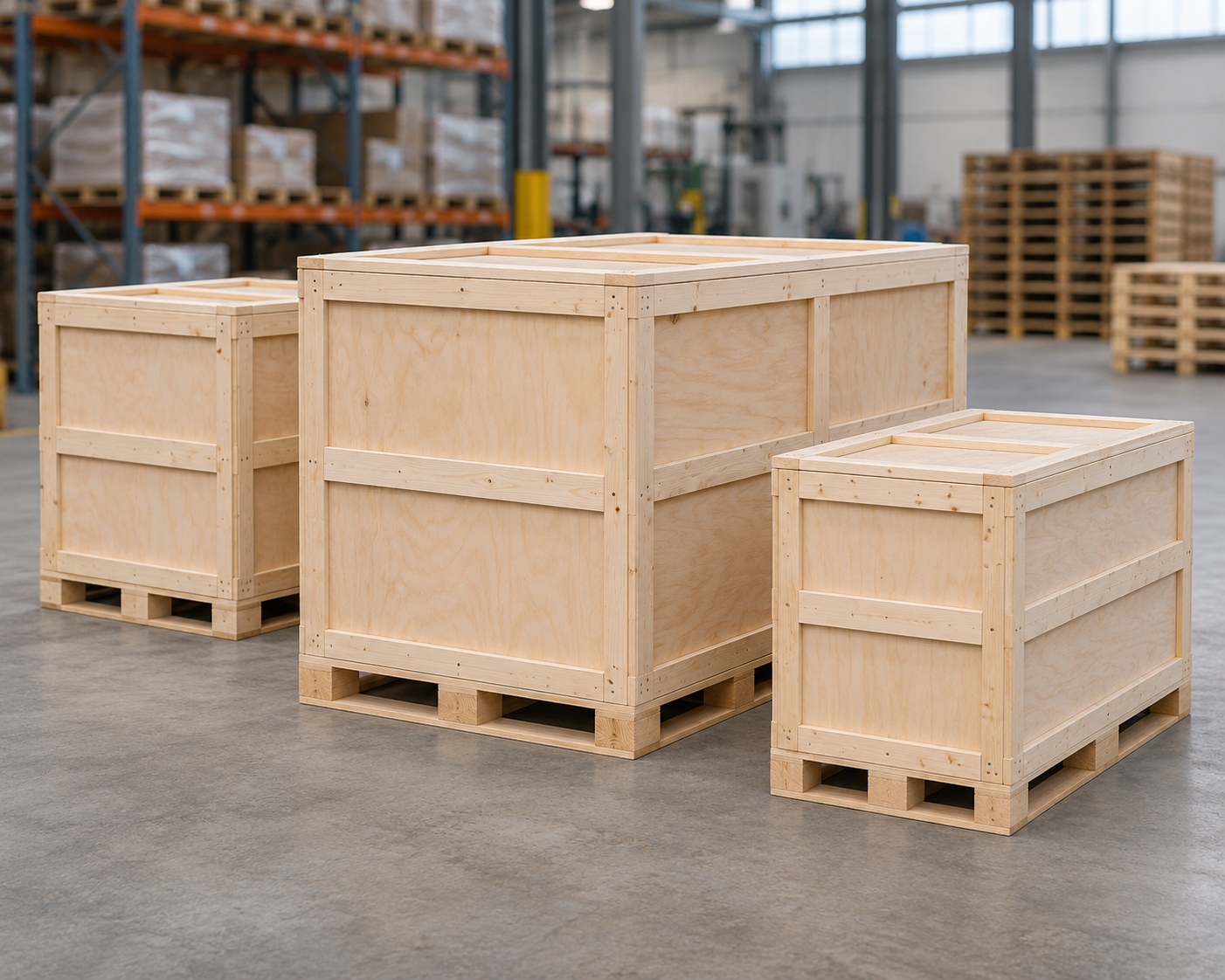
Plywood boxes can reduce packaging weight without sacrificing the structural support needed during transport. Their layered veneer construction provides a strong, rigid panel while weighing less than comparable solid timber packaging.
Here’s how plywood boxes reduce packaging weight and how their construction keeps your shipments properly supported.
How Plywood Boxes Reduce Packaging Weight
Reducing packaging weight starts with the material itself, then extends to how the box is designed and built around the product. Each factor below helps keep shipments lighter without reducing the protection they need.
- Lighter material than solid timber: Plywood boxes use relatively thin, strong panels in place of thick solid-timber boards, so the enclosure doesn’t need every face built from heavier timber to stay structurally sound. This reduces the weight your packaging adds to a shipment, which matters most when freight costs are calculated by weight, since every kilogram spent on packaging is a kilogram your shipment doesn’t gain in product.
- Packaging can be sized closely around the product: A box built to your product’s actual dimensions avoids unused internal space and the extra material needed to fill it. Custom sizing keeps the box compact and makes better use of available freight and container space.
- Construction can match the load: Reinforcement and material thickness can be scaled to suit your cargo’s specific weight and handling requirements, rather than applying the same build to every shipment. This prevents lighter goods from carrying unnecessary structural weight.
- Lower packaging weight reduces overall shipment mass: Every kilogram removed from the packaging reduces the total weight being freighted, which is particularly relevant for weight-sensitive transport such as airfreight. Lighter packaging can help keep freight costs down without changing how the product itself is handled.
How Plywood Boxes Maintain Strength without Excess Weight
Packaging weight can be reduced only when the box still withstands handling and transit. Here’s how plywood construction and box design help maintain the strength your shipment needs:
Layered Plywood Construction Creates a Strong Panel
Plywood is built from several thin wood veneers bonded together, rather than cut from a single solid piece of timber. Each layer is typically oriented with its grain running in a different direction from the one below it. This helps spread structural stress across the panel rather than concentrating it along a single grain line.
This layered approach gives plywood a strong strength-to-weight ratio, allowing relatively thin panels to provide substantial rigidity without relying on thick solid-timber boards. The result is a panel strong enough to form a stable, protective plywood shipping box while keeping the overall packaging weight down.
Lumber Framing Reinforces Critical Areas
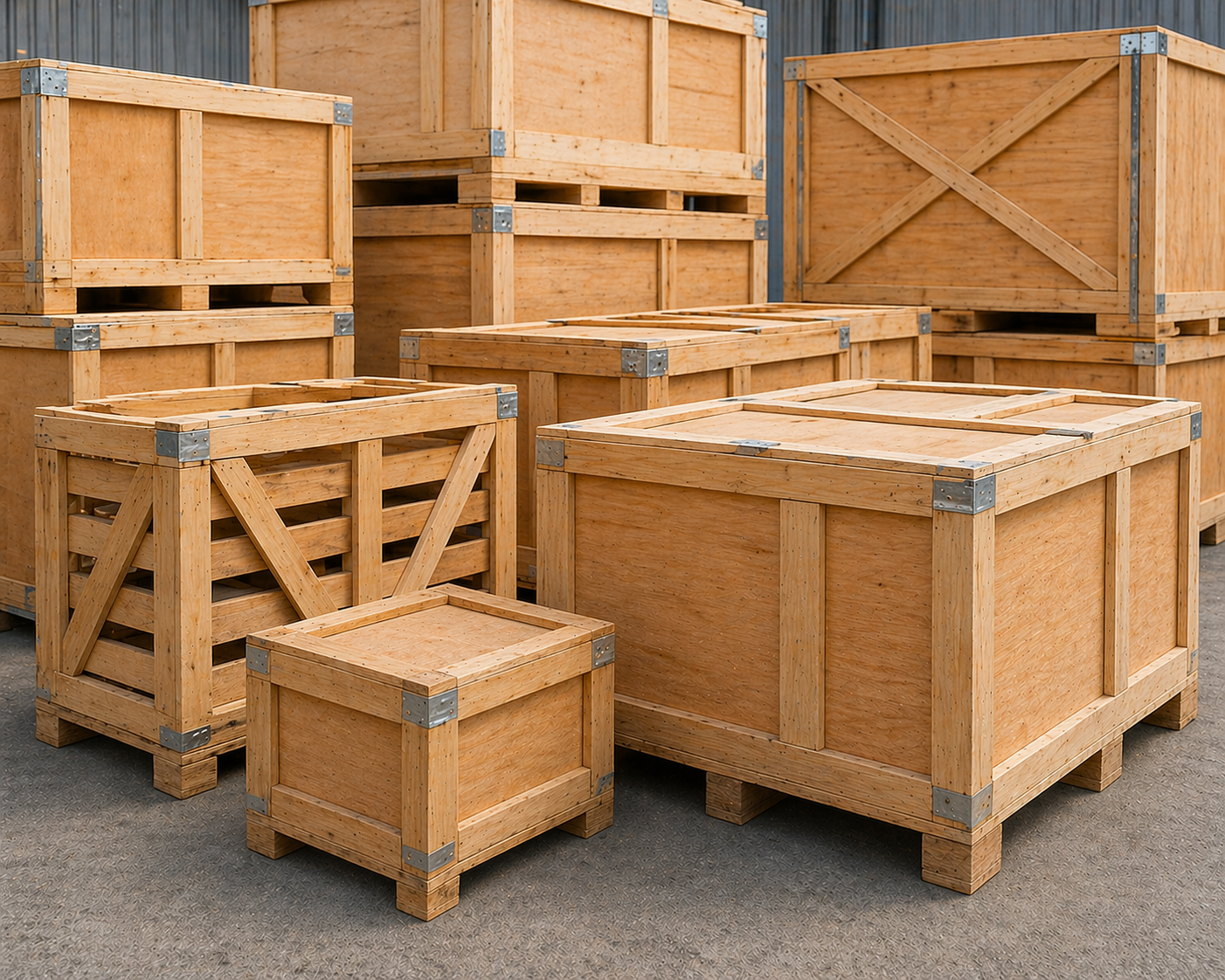
Plywood panels can be paired with lumber framing where a shipment needs added rigidity in specific areas. The framing usually runs along edges, corners and load-bearing sections. These areas are more likely to face impact, pressure or flexing during handling, stacking and freight.
Adding framing only where it’s needed means the whole enclosure doesn’t have to be built from heavier timber to reach the required strength. For example, a box carrying concentrated weight at its base can be reinforced in that area while the surrounding panels remain lighter.
If your shipment involves machinery or industrial components with concentrated load points, targeted reinforcement can be placed exactly where that support is needed.
Load-Specific Reinforcement Puts Strength Where It Is Needed
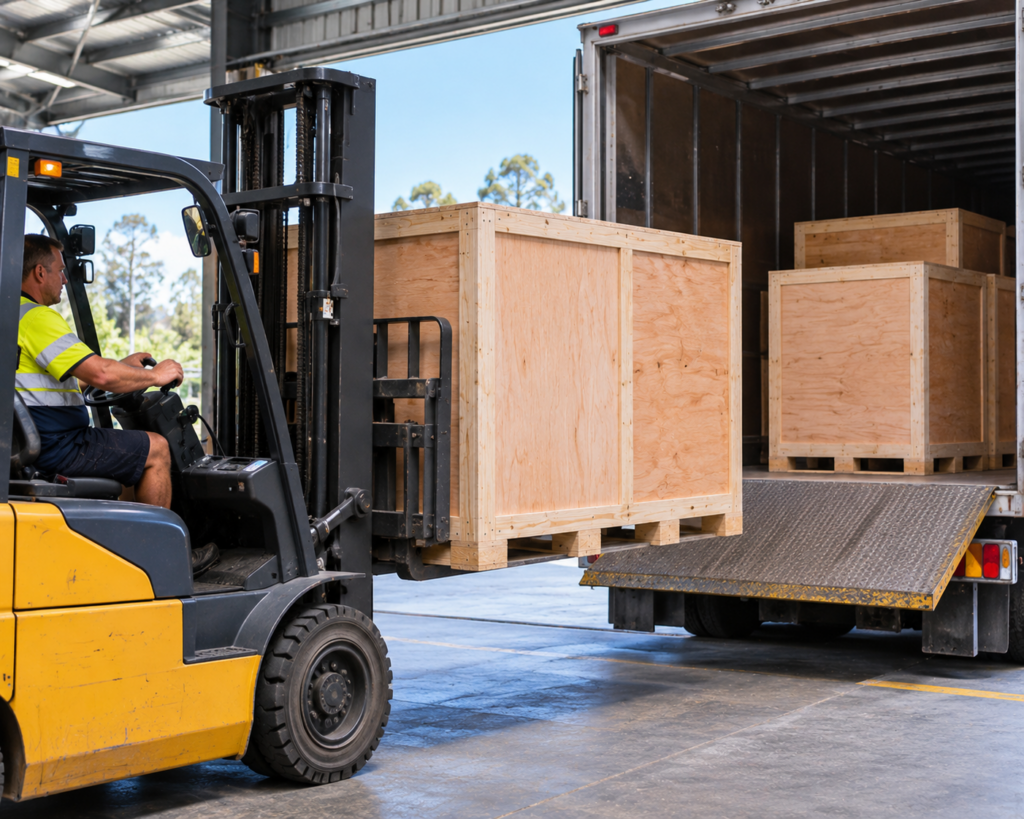
Instead of using one heavy-duty build for every shipment, a box can be designed around your cargo’s actual dimensions, weight and structural demands. Reinforcement is concentrated where the load places the most stress, while the rest of the enclosure stays lighter.
If you’re shipping electronics or other high-value equipment, you may need a lighter enclosure with reinforcement at specific points, while heavier machinery calls for a more robust configuration.
Extra Protection, Built In
Strength and weight aren’t the only things a plywood box needs to get right. For international shipments, biosecurity checks are a factor most businesses never think about until a shipment is delayed.
Waterstone Pallets treats the timber in its plywood boxes to meet ISPM 15 requirements, to ensure that your export packaging will meet the international standard. Heat treatment minimises the risk of pests in timber.
ISPM 15 compliant packaging means fewer surprises at customs and fewer delays before delivery, though it’s still worth checking the specific import rules for your destination country before goods are dispatched.
Dimensional Stability Helps the Box Retain Its Structure
Plywood’s cross-laminated construction provides good dimensional stability as moisture conditions change, helping the box retain its shape during storage and transport. A panel that holds its original dimensions keeps joints, corners and fittings properly aligned.
That stability supports the box’s overall structural integrity without relying on extra material or heavier construction simply to maintain rigidity. It contributes in a smaller but steady way to shipping packaging weight control, working alongside layered panel strength and load-specific reinforcement rather than replacing them.
Reducing packaging weight does not mean sacrificing strength when a plywood box is built correctly. Layered veneers provide a strong strength-to-weight ratio, while lumber framing reinforces key load points. Load-specific design and dimensional stability help the box protect cargo through storage and transit while keeping freight weight and costs down.
Need packaging built around your product’s weight and handling requirements? Waterstone Pallets is an experienced pallet manufacturer with the practical knowledge to design a plywood box, crate or custom timber solution that fits your shipment.
Contact us to discuss your requirements and request a quote.
FAQs
Can plywood shipping boxes be reused for multiple shipments?
Yes. Plywood shipping boxes can be reused across multiple shipments when the panels, framing and fastenings remain structurally sound. You should inspect the box for damage or weakened components before each reuse.
Are plywood boxes suitable for oversized or irregularly shaped goods?
Definitely. Plywood boxes can be custom-built around oversized or irregularly shaped goods, with tailored dimensions, framing and internal supports helping keep the load stable and protected during transport.
What information should I provide when ordering a custom plywood box?
You’ll need to provide your product’s dimensions, weight, shape, fragility, handling needs and transport requirements so the box can be designed correctly. Learn more about choosing standard or custom timber packaging, or get a quote for your requirements.